


Backyard Hardscape Ideas for Wisconsin Homes: Patios, Fire Pits & Outdoor Living Spaces
Looking for backyard hardscape ideas Wisconsin homeowners can enjoy? Start with how you want to use your yard. Patios, fire pits, walkways, lighting, and landscaping can create a welcoming outdoor space. The key is choosing features that fit your property, lifestyle, and Wisconsin’s changing seasons.
At Carrington Lawn & Landscape, we believe a great backyard starts with understanding how you want to spend time outside. From there, thoughtful design brings the right features together to make the most of your space.
How Do You Plan a Backyard Hardscape Design?
Start by picturing a great day outside. Maybe it’s coffee on the patio, weekend dinners with friends, or relaxing around a fire on a cool fall evening.
Before choosing features, ask yourself:
- Who will use the space? Consider everyday activities, family gatherings, and entertaining.
- When will you use it? Think about sun exposure, shade, and how your needs change throughout the day.
- What does your yard already offer? Look for views worth highlighting, natural slopes, and areas that could be put to better use.
You don’t need a large backyard to create an inviting outdoor living area. In fact, choosing a few features that serve multiple purposes can be more useful than trying to fit everything into a smaller yard.
Build Your Backyard Around a Comfortable Patio
For many Wisconsin homeowners, the patio is the heart of the backyard. A good layout accommodates your favorite activities while leaving room to move comfortably.
Keep these design tips in mind:
- Plan around furniture: Leave room to pull out dining chairs and move between seating areas.
- Choose the right location: A patio near the back door makes dining convenient, while a separate area offers a quieter retreat.
- Make narrow yards work: A linear layout can accommodate several activities without feeling crowded.
- Define spaces with materials: Contrasting paver patterns can separate dining and lounging areas without walls.
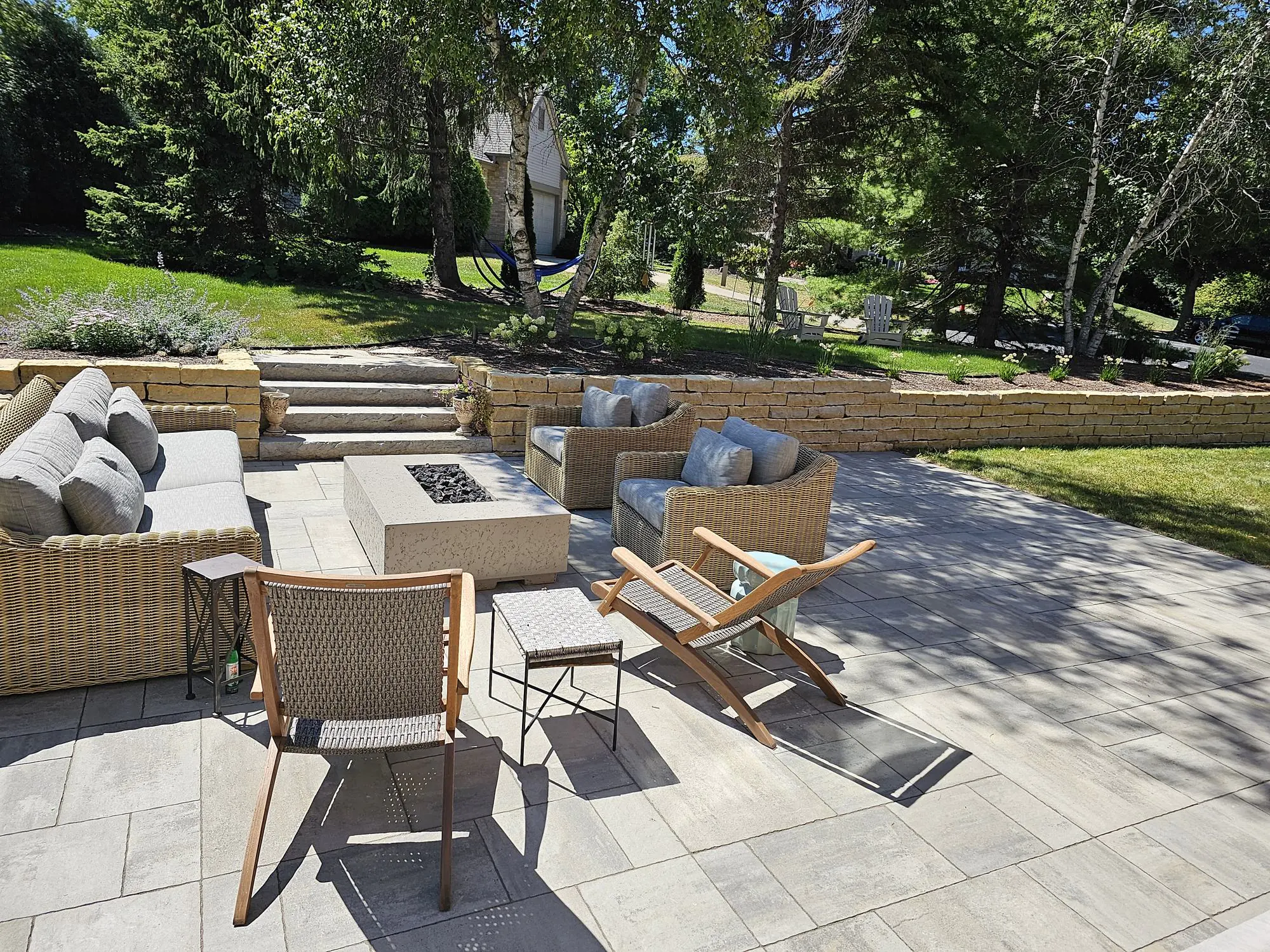
Our Waunakee outdoor living project uses a linear layout to fit dining, lounging, and a gas fire feature into a narrow backyard.
Materials matter, too. Concrete pavers offer a variety of design options, while natural stone brings unique character. When comparing concrete vs. paver patios, consider not just appearance but also maintenance, installation, and how each option suits your property.
Create a Gathering Spot With a Backyard Fire Pit
A fire pit makes cooler Wisconsin evenings more enjoyable, but placement matters. Positioning it away from the dining area can create a separate conversation space without interrupting the main patio.
Consider these design options:
- Circular gathering areas: Arrange chairs around the fire for easy conversation.
- Built-in seating walls: Add seating while leaving room for movable chairs.
- Separate fire pit patios: Create a cozy destination connected by a walkway.
Working with an existing patio? You may not need to replace it to add a fire feature.
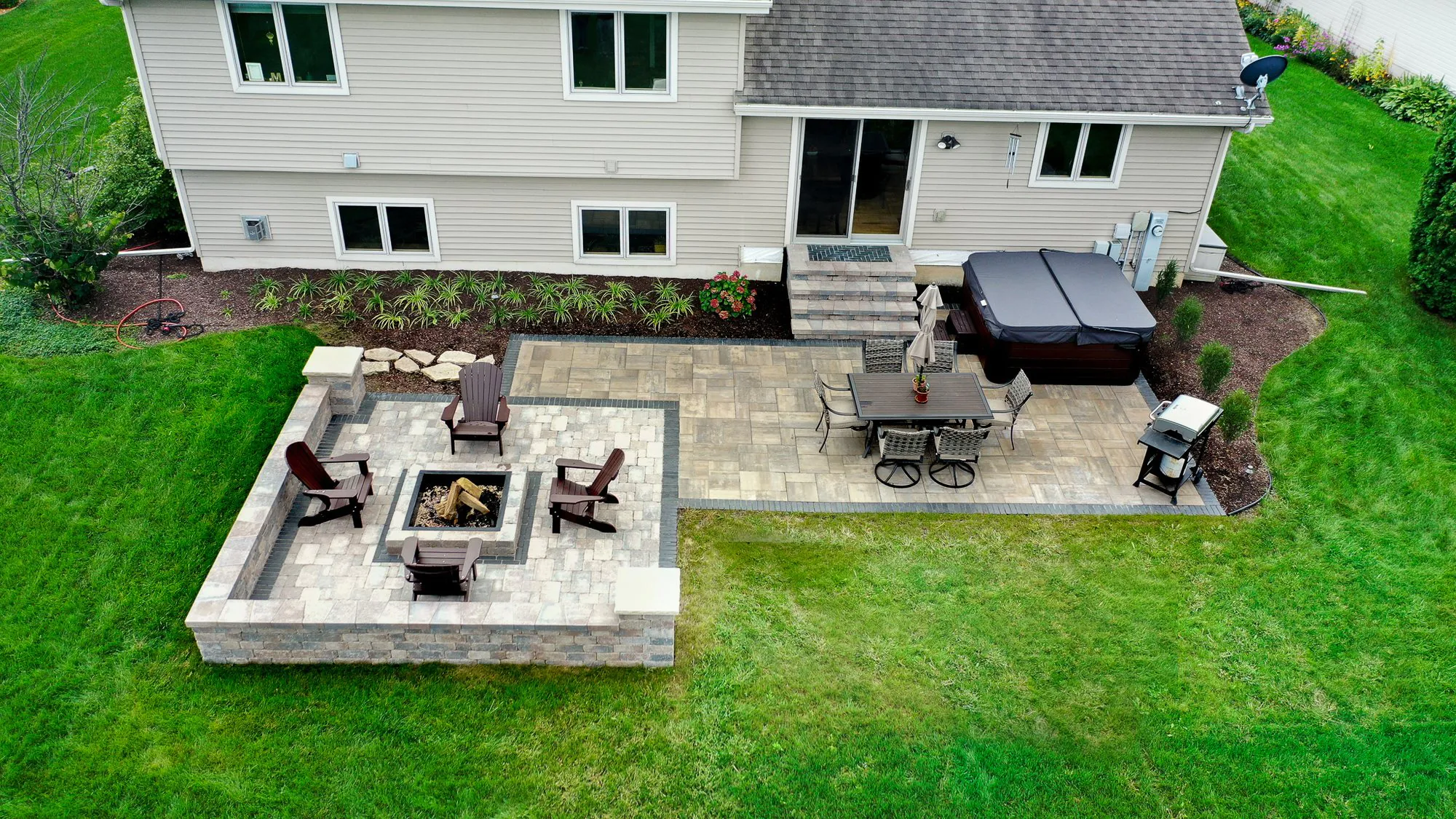
In our DeForest patio and fire pit project, we designed custom seating walls around an asymmetrical concrete patio. Rather than forcing a perfectly symmetrical layout, we adjusted the design to fit the existing space.
When exploring fire pit landscape design ideas, remember to account for seating clearance, wind direction, nearby structures, and local fire regulations. If you’re considering natural gas, plan for the gas line early.
Work With Your Yard’s Natural Layout
Not every backyard is level, and that’s not necessarily a disadvantage. Changes in elevation can create opportunities for gathering areas, garden beds, and interesting transitions.
Consider how different features can work with your property:
- Retaining walls: Create level areas for patios, lawns, or planting beds.
- Outdoor steps: Connect elevations and improve access between gathering areas.
- Walkways: Use direct paver paths for frequently traveled routes and natural stone paths through gardens.
Planning a new deck or addition? Consider the surrounding landscape before finalizing stair locations. Where stairs end can affect patio placement, walkways, and grading.
In our Madison landscape design project, a home renovation created several elevation challenges. Our team used grading, retaining features, and steps to connect the raised deck with the surrounding yard.
Considering these relationships early in the hardscape design process helps avoid awkward transitions and makes better use of your property’s existing features.
Create Privacy Without Closing Off Your Backyard
You don’t need a tall fence to create a more private outdoor space. Focus on screening the areas where neighboring windows or street views affect your comfort.
A few approaches include:
- Screen specific sightlines: Add privacy features where they’re needed instead of enclosing the yard.
- Layer plants and structures: Combine narrow trees, shrubs, and decorative screens for coverage at different heights.
- Consider year-round privacy: Evergreens and structural screens provide coverage when deciduous plants lose their leaves.
Pay attention to mature plant sizes, too. A shrub that fits perfectly today may eventually crowd a walkway or seating area.
Thoughtful softscape landscaping can balance privacy, seasonal color, and available space. Ornamental grasses and perennials can also soften patio edges and make gathering areas feel more connected to the surrounding landscape.
Use Landscape Lighting to Make Evenings More Inviting
Rather than lighting everything equally, focus on where you’ll walk, gather, and spend time after sunset.
- Improve visibility: Add path lights and step lights along frequently used routes.
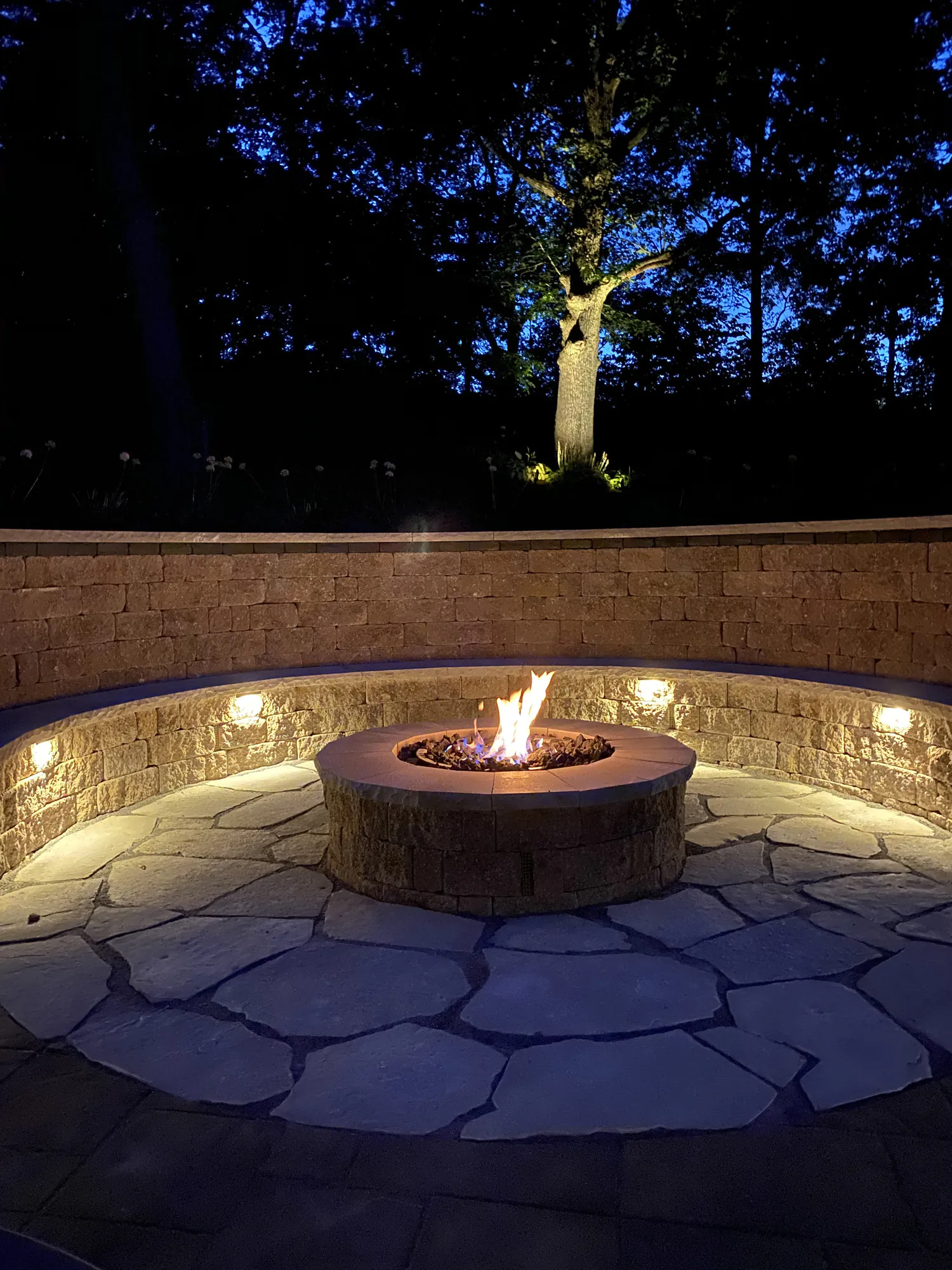
- Highlight features: Use uplighting to draw attention to trees or stonework.
- Create atmosphere: Choose subtle accent lighting around patios and seating walls to avoid excessive glare.
If possible, plan lighting before hardscape installation so wiring and fixture locations can be coordinated without disturbing finished patios or planting beds.
With a coordinated landscape lighting design, you can enjoy the details of your backyard after dark while keeping frequently used areas comfortable and easy to navigate.
What Should Wisconsin Homeowners Know Before Installing Hardscapes?
Some of the most important parts of a patio aren’t visible once it’s finished.
Wisconsin’s rain, snowmelt, and freeze-thaw cycles make proper drainage and base preparation essential. Water beneath a patio can contribute to shifting and uneven surfaces.
Important installation details include:
- Base preparation: Excavation depth and materials should account for soil conditions and intended use.
- Grading and drainage: Proper slopes help direct water away from your home.
- Edge restraints: Secure edges help prevent pavers from spreading over time.
When reviewing patio plans, ask how the base will be prepared and where water will drain. These paver patio installation details can make a meaningful difference in Wisconsin.
For additional runoff solutions, the University of Wisconsin–Madison Extension offers guidance on rain gardens.
Bring Your Backyard Ideas to Life With Carrington Lawn & Landscape
The right backyard design isn’t necessarily the one with the most features. It’s the one that makes the most of your property and how you want to enjoy it.
Since 1998, Carrington Lawn & Landscape has helped Madison-area homeowners create outdoor spaces with thoughtful design and professional installation.
From narrow yards to existing patios and challenging slopes, our team brings practical experience to each project. Through our landscape design and installation process, we’ll help you explore options and make informed decisions before construction begins.
Learn more about our team or share what you’re envisioning for your backyard. Let’s Talk.