


Concrete vs Paver Patio: What’s Right for Madison Homeowners?
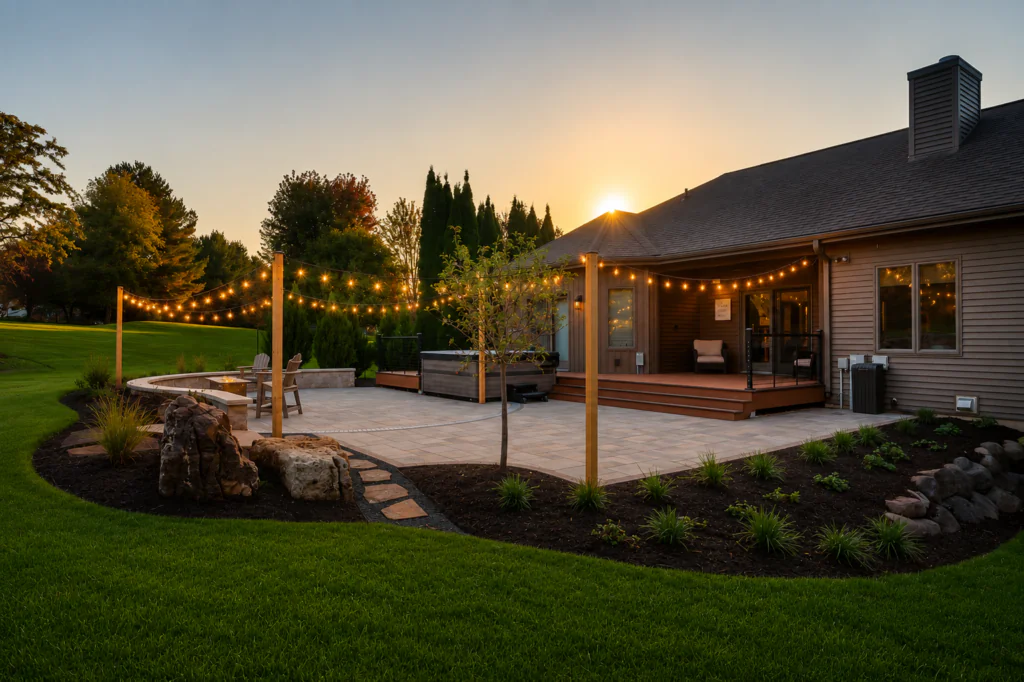
For most Madison homeowners, a paver patio offers better flexibility, easier repairs, and more design options than poured concrete. Concrete may have a lower initial cost, but Wisconsin’s freeze-thaw cycles can make cracking and long-term repairs an important concern.
Choosing between a concrete vs paver patio is about more than appearance. Your budget, property conditions, maintenance expectations, and plans for the space should all guide the decision.
At Carrington Lawn & Landscape, we help homeowners create outdoor spaces that fit their homes, lifestyles, and Wisconsin’s changing seasons.
What Is the Difference Between a Concrete and Paver Patio?
A concrete patio is poured as one continuous slab. It may have a smooth, brushed, colored, or stamped finish.
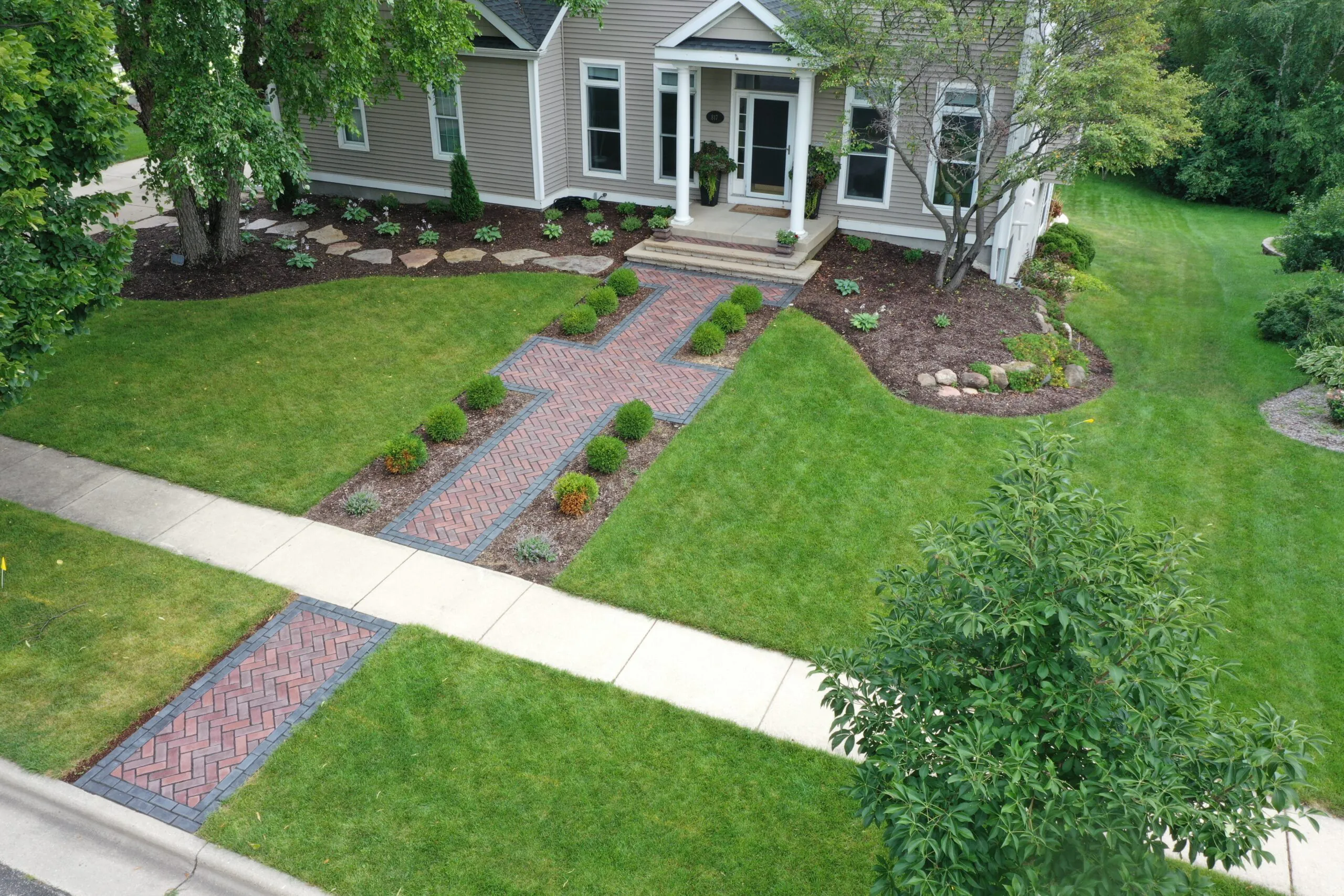
A paver patio is built with individual concrete or natural stone units placed over a carefully prepared base. We work with professional-grade concrete pavers from manufacturers such as Unilock® and Belgard® for their consistent quality, long-term durability, and wide range of design options.
That construction difference affects how each patio looks, ages, and can be repaired.
| Consideration | Concrete Patio | Paver Patio |
|---|---|---|
| Initial investment | Often lower | Often higher |
| Design options | Colors, finishes, and stamped patterns | Many colors, shapes, patterns, and borders |
| Freeze-thaw performance | More vulnerable to visible slab cracking | Designed to flex with freeze-thaw cycles |
| Repairs | Patched areas may remain visible | Individual pavers can often be replaced |
| Installation time | Usually faster for a basic slab | More detailed base and placement work |
| Long-term flexibility | Limited after pouring | Easier to modify or expand |
| Overall appearance | Clean and simple | Detailed and highly customizable |
How Does Wisconsin Weather Affect Patio Materials?
Madison’s changing temperatures matter when selecting a patio surface. Water can enter small pores or cracks, freeze, expand, and place pressure on hardscape materials. Repeated freezing and thawing can gradually make existing concrete cracks larger.
A poured concrete slab has limited flexibility. If the soil below it shifts or moisture reaches a weak point, a crack may travel across part of the surface. Control joints help manage cracking, but they cannot prevent every crack.
Paver systems can accommodate slight movement better than one large slab. Paver systems are engineered to flex with Wisconsin’s freeze-thaw cycles. When installed correctly, movement is typically little to none because the system is engineered to accommodate normal seasonal expansion and contraction. If settling or damage does occur, a contractor can often lift the affected pavers, correct the base, and reinstall them instead of replacing the entire patio.
Proper installation remains essential for either material. Excavation depth, base preparation, compaction, grading, and drainage can have as much impact on long-term performance as the surface material itself.
What Are the Advantages of a Concrete Patio?
Concrete can be a practical choice for homeowners who want a straightforward patio with a clean appearance.
Common benefits include:
- Lower starting cost: A basic poured slab often costs less than a detailed paver installation.
- Faster installation: Simple concrete patios may require less placement time.
- A smooth surface: Concrete can work well beneath dining tables, chairs, and other patio furniture.
- Finish choices: Homeowners can select brushed, colored, or stamped concrete.
Concrete also works well with modern homes that benefit from broad, simple lines.
The main trade-off is repairability. Although small cracks may be filled, the repaired area may not match the original surface. Larger damage can require cutting out and replacing part of the slab.
Why Do Many Madison Homeowners Choose Paver?
Pavers are a popular option for homeowners who want a patio that feels
integrated with the rest of the landscape.
They offer several practical benefits:
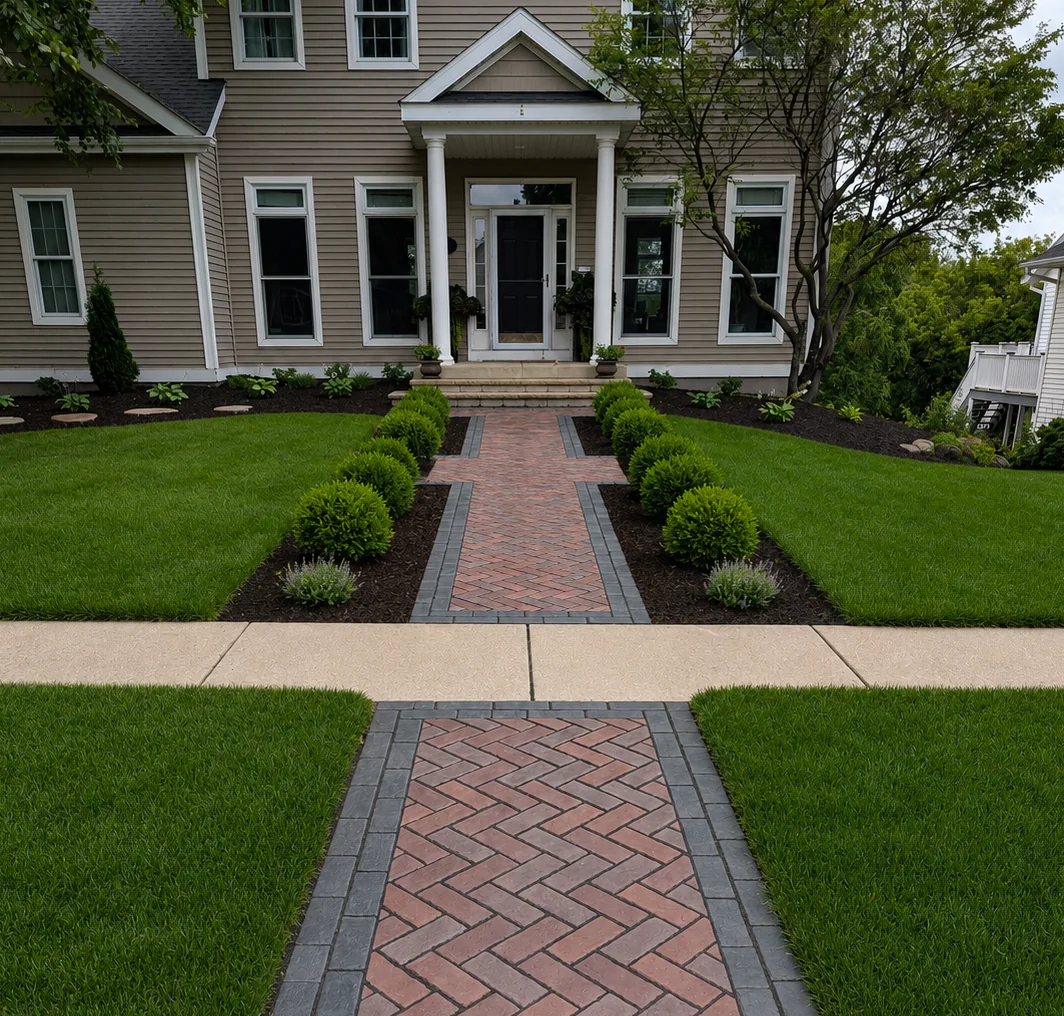
- Flexible design: Colors, sizes, textures, laying patterns, and accent borders can be combined.
- Simpler repairs: A damaged or stained unit can often be replaced individually.
- Better response to movement: Joints allow a small amount of flexibility during seasonal ground changes.
- Easy integration: Pavers can connect patios with walkways, steps, fire features, retaining walls, and outdoor kitchens.
- Future options: An existing patio may be easier to expand when matching materials remain available.
Pavers are not maintenance-free. Jointing sand may need to be replenished, and some surfaces benefit from periodic cleaning or sealing. Carrington Lawn & Landscape provides more design and care guidance in our paver patio considerations blog.
How Should You Choose Between Concrete and Pavers?
Choose concrete when your priorities are a simpler appearance, a potentially lower initial investment, and a basic patio layout.
Choose pavers when you value design flexibility, easier localized repairs, and a surface that can respond more effectively to Wisconsin’s seasonal movement.
Before deciding, ask these questions:
- How will your family use the patio?
- Will it include dining, cooking, a fire feature, or several seating areas?
- Does the yard have drainage or grading concerns?
- Should the patio match existing brick, stone, or architecture?
- Might you expand the outdoor living area later?
- How much ongoing care are you comfortable providing?
Professional hardscape design can bring these considerations together so the patio works as part of the entire property, not as an isolated surface.
Plan a Patio That Fits Your Madison Home
The right patio should look good, drain properly, and support the way you want to spend time outdoors. Carrington Lawn & Landscape combines thoughtful planning, practical recommendations, and professional installation for homeowners throughout Madison and nearby Dane County communities.
Learn more about our team or Let’s Talk about your patio and landscape goals.