

5 Signs Your Landscaping Shrubs Need Professional Pruning (Before It’s Too Late)
Shrubs usually give you warning signs before they become difficult to manage. Professional pruning may be needed when shrubs are overgrown, crowded, damaged, misshapen, or interfering with your home and walkways.
Carrington Lawn & Landscape helps Madison-area homeowners manage shrubs as part of ongoing landscape care, with attention to plant health, appearance, and how each shrub fits the property.
Why Professional Pruning Is Different From a Quick Trim
Pruning is not simply cutting back whatever looks too long. Different cuts affect how a shrub grows, fills out, flowers, and responds over time.
Professional pruning can be used to control size, direct growth, improve structure, rejuvenate older plants, and maintain a more natural appearance.
Here are five signs it may be time to have your shrubs evaluated.
1. Branches Are Crossing, Rubbing, or Growing Into Each Other
A healthy shrub should have enough room for its branches to develop without constantly competing for the same space.
Crossing and rubbing branches can create weak points and unnecessary damage over time. They can also make the center of the shrub increasingly crowded as new growth develops around older stems.
Look deeper into the shrub rather than only at its outside shape. You may notice:
- Branches rubbing against one another
- Stems growing toward the center
- Crowded interior growth
- Broken or damaged wood
- Multiple stems competing for the same space
Selective pruning can remove problem branches while preserving the shrub’s natural form.
2. Your Shrub Is Taking Over Walkways, Windows, or Other Plants
Shrubs grow gradually, so it is easy to overlook how much space they have taken up until a walkway feels narrow or a window is partially blocked.
Professional pruning may help when branches begin:
- Extending across sidewalks or steps
- Blocking windows or sightlines
- Growing against siding or other structures
- Crowding nearby shrubs and perennials
- Interfering with routine lawn or landscape maintenance
The goal should not always be to make the entire plant dramatically smaller. Often, selective cuts can create needed clearance while maintaining a balanced appearance.
For shrubs that repeatedly outgrow the same location, pruning may only be part of the solution. The mature size of the plant and the available space should also be considered.
3. The Center of the Shrub Is Thick, Tangled, or Bare
A dense outside layer can hide problems inside a shrub.
Some homeowners respond to fast growth by repeatedly shearing the exterior. That can create a tight shell of foliage while the interior becomes crowded or sparse. UW-Madison Extension explains that shearing can create dense outer growth while reducing foliage and flowering inside the plant.
Signs of excessive density can include:
- Lots of twiggy growth near the outside
- Very little foliage deeper inside
- Older stems packed tightly together
- A shrub that looks heavy or uneven
- New growth appearing mostly at the outer edge
In these situations, thinning cuts may be more useful than another surface trim. Removing selected stems farther inside the plant can improve structure without turning the shrub into a tight geometric shape.
4. You See Dead, Broken, or Declining Branches
Dead and damaged wood is one of the clearest reasons to take a closer look at a shrub.
Branches may be damaged by winter weather, heavy snow, animals, equipment, or other stresses. Removing damaged growth can help preserve the healthier parts of the shrub and keep small problems from becoming harder to manage.
Watch for branches that:
- Stay leafless while surrounding stems leaf out
- Have cracked or split wood
- Hang loosely after storms
- Show visible dieback from the tips
- Break easily when inspected
A few dead stems do not automatically mean an entire shrub is failing. Professional pruning can remove damaged growth while preserving healthy portions of the plant.
If you suspect disease, it is especially important to identify the problem before making widespread cuts.
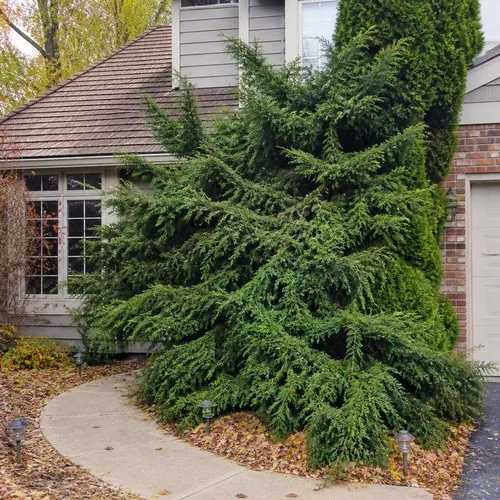
5. The Shrub Has Lost Its Natural Shape
Mature shrubs often become less attractive when years of growth are managed only from the outside.
You may notice a shrub that is:
- Top-heavy
- Lopsided
- Leggy near the bottom
- Full of old, thick stems
- Too large for its original space
For many multi-stem shrubs, renewal pruning can help by removing some of the oldest stems near ground level. This creates room for younger growth and can improve the overall structure without cutting every branch to the same height.
That is very different from simply shearing the outside smaller. A selective approach can help an aging or overgrown shrub look more natural while making future maintenance easier.
When Is DIY Pruning No Longer Enough?
Basic pruning can be manageable when you are removing a small dead stem or making a minor correction. Professional help becomes more useful when the plant is large, heavily overgrown, difficult to identify, or needs structural correction.
It may also make sense to call for professional pruning when you are unsure how much can safely be removed or when previous trimming has created a dense, misshapen shrub.
Carrington Lawn & Landscape offers landscape maintenance services that can include ornamental shrub care as part of a broader approach to maintaining residential landscapes.
If your main question is timing rather than condition, read our guide to winter pruning in Wisconsin for more seasonal guidance.
Give Your Wisconsin Shrubs the Care They Need
Shrubs are a long-term part of your landscape. Addressing crowding, damage, overgrowth, and structural problems early can make them easier to manage and help the entire property look more intentional.
Carrington Lawn & Landscape has served the Madison area and surrounding Dane County communities since 1998. Learn about our team and story or explore landscaping services available in Madison, WI.
If your shrubs are showing signs that a quick trim is no longer enough, Let’s Talk about your landscape maintenance needs.