

10 Paver Patio Design Ideas & Planning Considerations: 2026 Guide
The best paver patio designs are about more than color and pattern. A thoughtful plan considers how you want to relax, entertain, and move through the space, along with drainage, sunlight, materials, and Wisconsin weather.
At Carrington Lawn & Landscape, our designers help homeowners create patios that feel comfortable, welcoming, and connected to the home. Instead of chasing every new trend, we focus on choices that suit your style and how you want to enjoy your yard.
What Should You Plan Before Choosing Patio Pavers?
Before you fall in love with a particular paver, take a step back and think about how the patio should work. A little planning now can make the finished space much more enjoyable.
Create Zones for the Way You Live
Your patio may need to serve more than one purpose. Consider whether you want space for:
- Outdoor dining: A four-person table may need around 100 to 120 square feet. Larger tables need extra room for chairs and comfortable movement.
- Lounge seating: Leave space for sofas, chairs, side tables, and clear walking paths.
- A fire pit: Plan for the feature, seating, and appropriate clearances.
- A grill or outdoor kitchen: Include room for cooking, serving, and moving between areas.
These zones do not need walls. A contrasting border, paver inlay, or change in pattern can gently separate dining and lounge spaces while keeping the patio open and inviting.
Pay Attention to Sun and Shade
Spend time watching how sunlight moves through your yard. A patio that feels pleasant in the morning may become hot by late afternoon.
Think about when you are most likely to use the space and whether you may eventually add a pergola, pavilion, or other shade structure. Including those features in the original landscape design and installation plan can help avoid awkward post placement or drainage problems later. Carrington Lawn & Landscape’s design-build process considers the full outdoor space, from the first plan through installation.
Make Drainage Part of the Design
A well-designed patio should direct water away from your home and avoid low spots where puddles can form.
Depending on the property, drainage planning may involve grading, downspout adjustments, drains, or retaining walls. This is especially important around Madison, where freeze-thaw cycles can cause movement when water collects below or around the patio.
10 Paver Patio Design Ideas
1. Herringbone
Herringbone arranges rectangular pavers in a repeating V-shaped pattern. It can be installed at a 45- or 90-degree angle.
The pattern adds movement and character, making it a good fit for active areas or homeowners who enjoy a classic, detailed look.
2. Running Bond
Running bond offsets each row from the one before it. The result is clean and familiar without feeling plain.
The direction of the pavers can also help a narrow patio or walkway appear longer.
3. Stacked Bond
Stacked bond places pavers in a straight grid. Its crisp lines work especially well with modern homes and large-format pavers.
Because the joints line up, precise installation is important for a polished appearance.
4. Three-Piece Patterns
Three-piece patterns combine several paver sizes in one coordinated layout. The variation creates a relaxed, natural stone feel that works nicely with traditional, rustic, and transitional homes.
This style can also keep a large patio from feeling too repetitive.
5. Paver Inlay “Rugs”
A paver inlay works much like an indoor area rug. It can visually anchor a dining table, fire pit, or lounge area while giving the patio a custom touch.
The inlay may use a different color, size, material, or pattern direction. A contrasting border can help complete the look and make the zone feel intentional.
6. Contrasting Borders
Borders add definition without closing off the space. They can frame the entire patio or separate one activity zone from another.
Choose a color or texture that stands apart from the main paver while still complementing the home and surrounding landscape.
7. Oversized Pavers
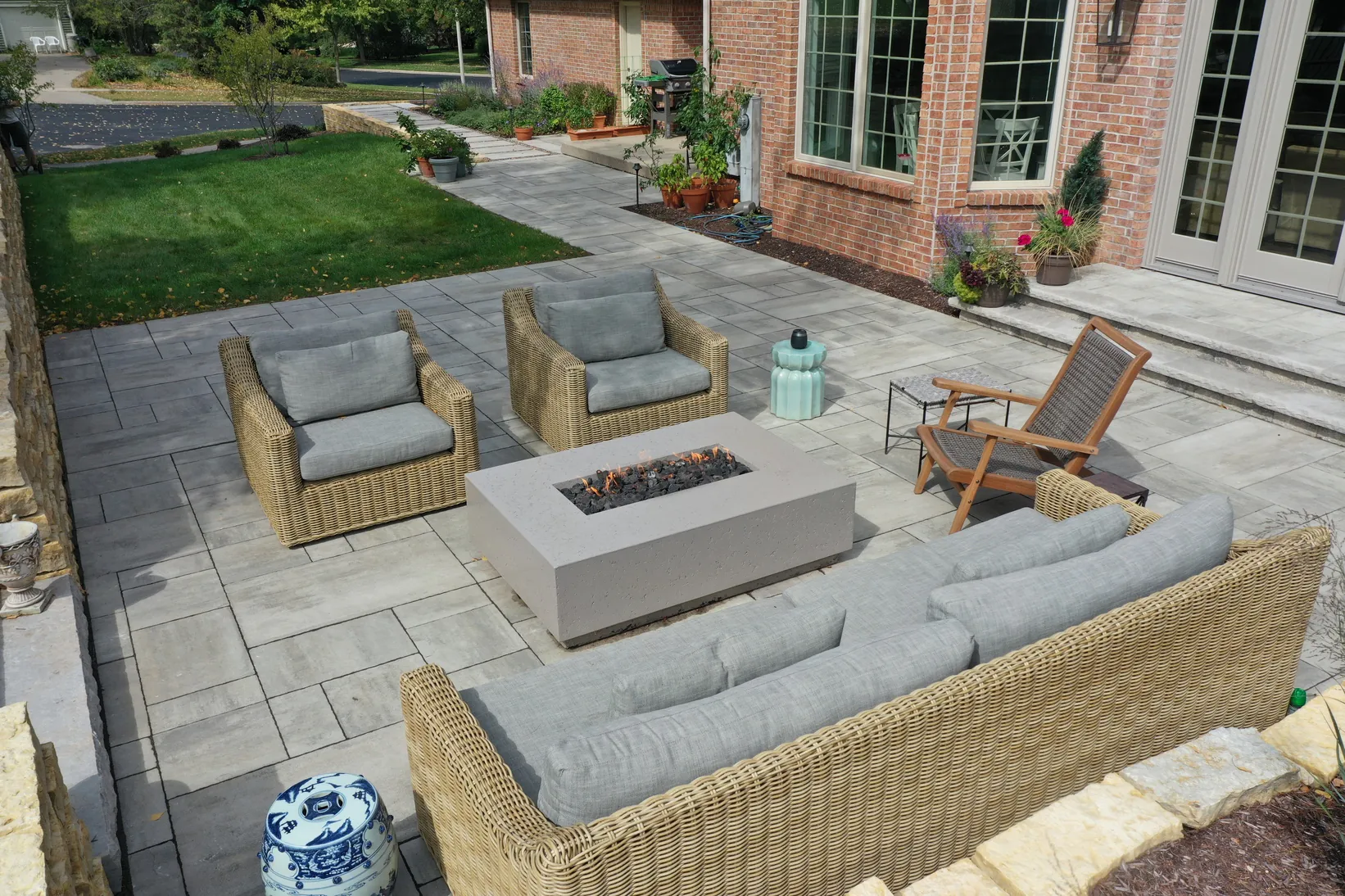
Pavers measuring 24 by 24 inches or larger create a simple, modern look. With fewer joint lines, they can make an outdoor space feel calm and open.
Large-format pavers require careful base preparation because small height changes may be more noticeable.
8. Mixed Paver Sizes
Combining large and small pavers adds texture without introducing too many colors or materials.
Smaller units can be used around curves and borders, while larger units create a quieter main patio surface.
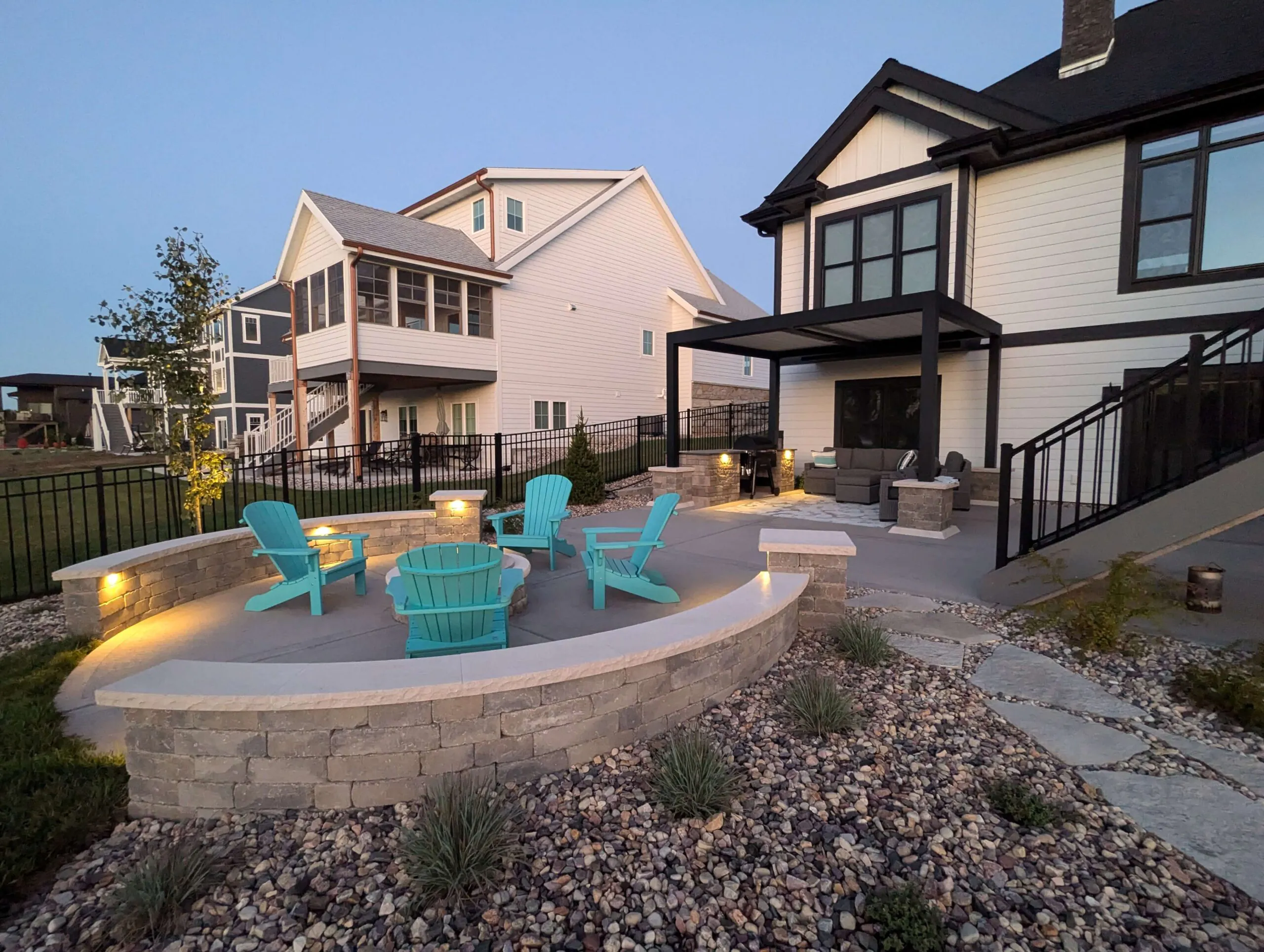
9. Curved Patio Edges
Curved edges soften the lines of a rectangular yard and help the patio flow into nearby lawn or planting beds.
They work especially well around round fire pits and informal seating areas. Because curves require more cutting, they should support the overall layout rather than being added only for decoration.
10. Natural Stone-Inspired Designs
Natural colors and textures give a patio a timeless, settled-in appearance. You can achieve this look with natural stone or concrete pavers designed to resemble it.
For more inspiration, explore the Carrington Lawn & Landscape project gallery, which includes patios, fire pits, walkways, walls, and other completed outdoor spaces.
Which Patio Material Works Well in Wisconsin?
Appearance matters, but the material also needs to suit the site and our Midwest climate.
- Concrete pavers come in a wide range of shapes, colors, and finishes. Individual units can often be removed and reset if repairs are needed.
- Bluestone offers natural variation and a classic appearance that pairs well with traditional homes and established landscapes.
- Clay brick brings warmth and character to patterns such as herringbone and running bond. Be sure the product is made for exterior paving.
- Outdoor porcelain offers a clean, consistent finish and can resemble stone, concrete, or wood.
Whichever material you prefer, the product and installation system should be suitable for moisture, frost, and repeated freeze-thaw conditions. Guidance from the Concrete Masonry & Hardscapes Association emphasizes the importance of base preparation, drainage, and site conditions in segmental pavement construction.
What Affects the Cost of a Paver Patio?
The pavers are only one part of the total investment. Cost can also be affected by:
- Patio size and shape
- Excavation and base depth
- Access for crews and equipment
- Drainage needs
- Retaining walls, steps, or grade changes
- Curved edges and detailed patterns
- Standard versus premium paver lines
- Fire pits, seat walls, lighting, or outdoor kitchens
A flat, open yard will have different construction needs than a sloped property with limited access. Carrington Lawn & Landscape evaluates the site and design goals before developing recommendations. Our landscape pricing guide provides additional context for planning an outdoor project.
How Do You Care for a Paver Patio?
Paver patios are generally simple to care for, but they are not maintenance-free.
Regular care may include sweeping, occasional washing, stain treatment, replenishing joint sand, and resetting pavers that settle over time. Sealing may also be appropriate depending on the paver and the look you prefer.
Carrington Lawn & Landscape uses polymeric jointing sand where appropriate to help stabilize joints and reduce erosion, weed growth, and pest activity. That material may need to be replenished as the patio ages.
FAQs About Paver Patio Designs
What is the most durable paver pattern?
Herringbone is commonly used in active areas because of its interlocking layout. However, the base, drainage, edge restraints, and quality of installation have a greater effect on long-term performance than the pattern alone.
Can I use different patterns on one patio?
Yes. Borders, inlays, and changes in pattern direction can define dining, lounge, and cooking zones without making the patio feel divided.
Are concrete pavers suitable for Wisconsin winters?
Concrete pavers can perform well when the product and installation are designed for local freeze-thaw conditions. Proper drainage and base preparation are essential.
Does a paver patio need to be sealed?
Not always. Sealing may deepen the color or make some surfaces easier to clean, but the right choice depends on the specific paver and desired finish.
Make Room for More Time Outside
A patio should feel like a natural place to gather, unwind, and enjoy your home. Carrington Lawn & Landscape has served Madison and surrounding Dane County communities since 1998, building outdoor spaces around practical planning, clear communication, and long-term enjoyment.
Get to know our team, explore our work throughout the Madison area, or Let’s Talk about the patio you have in mind.