


Organic vs. Hybrid Lawn Care: Which Program Is Right for Your Madison Yard?
The main difference between organic vs hybrid lawn care is how each approach feeds turf and manages weeds. Organic care avoids conventional herbicides, while hybrid care combines organic fertilization with targeted weed control. The right choice depends on your lawn, weed tolerance, and priorities.
Carrington Lawn & Landscape offers both approaches for Madison-area homeowners, but understanding how each works can help you make a more informed choice.
Comparing Organic vs. Hybrid Lawn Care
Organic and hybrid lawn care can both support a healthy lawn, but they take different approaches to fertilization and weed control. The right fit depends on your priorities, current weed pressure, and how much herbicide use you are comfortable with.
| Consideration | Organic Lawn Care | Hybrid Lawn Care |
|---|---|---|
| How it works | Uses naturally derived fertilizers and can avoid herbicides entirely | Combines organic fertilization with targeted conventional treatments |
| Fertilization | Nutrients are typically released gradually as soil microorganisms break down organic materials | Can combine organic fertilizer with other treatments at strategic points in the season |
| Weed control | A fertilizer-only organic program does not directly control existing broadleaf weeds | Allows targeted herbicide use when additional weed control is needed |
| Herbicide use | Can be completely herbicide-free | Reduces herbicide use but does not eliminate it |
| Soil focus | Supports biological activity in the soil while feeding turf | Incorporates organic practices while also addressing specific lawn concerns |
| Lawn appearance | Homeowners may need to accept some dandelions, clover, or other weeds | Can provide greater control over troublesome weeds while still incorporating organic practices |
| Good fit for | Homeowners who prioritize an organic approach and are comfortable with some weeds | Homeowners who want a balance between weed control and reducing herbicide use |
| Main tradeoff | Weed control is more limited without herbicides | The program is not fully organic |
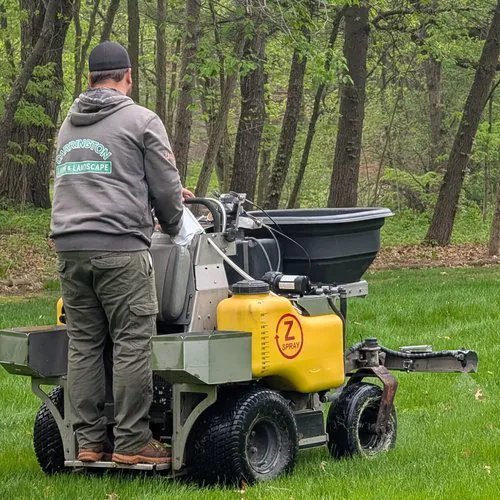
The key difference is weed tolerance. A homeowner who wants to avoid herbicides may be comfortable accepting a few more weeds. Someone who wants targeted weed control while still incorporating organic fertilizer may find a hybrid approach better aligned with their goals.
What Should Madison Homeowners Consider Before Choosing?
Fertilizer type is only one part of the decision. Look at your existing lawn and decide what you realistically want from it.
Ask yourself:
- How much do weeds bother me? Homeowners who want very few visible weeds may want some targeted weed control.
- What condition is my lawn in? Thin turf and bare areas leave more room for weeds to establish.
- How important is reducing herbicide use? Organic and hybrid approaches offer different levels of reduction.
- Am I comfortable with gradual results? Organic fertilizer generally releases nutrients over time.
- How am I caring for the lawn between treatments? Fertilizer cannot correct every turf problem on its own.
Madison’s changing seasons also matter. Cool springs, summer heat, periods of drought, heavy rainfall, and soil compaction can all affect how turf responds.
Do Mowing, Watering, and Soil Health Matter as Much as Fertilizer?
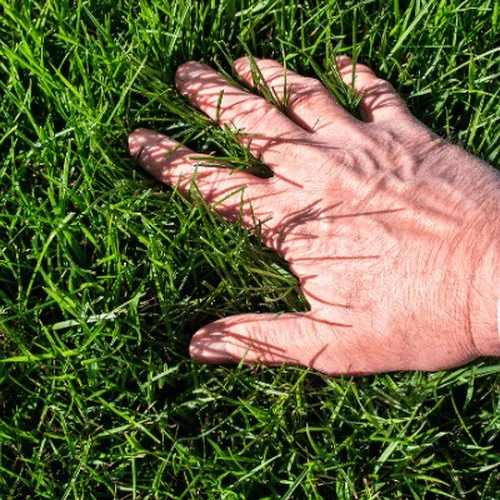
Yes. A healthy lawn depends on more than what is applied to it.
UW–Madison Extension recommends mowing Wisconsin lawns about 2½ to 3½ inches high and avoiding the removal of more than one-third of the grass blade at a time. Taller, healthier turf can shade the soil and make it harder for some weeds to establish.
Good lawn habits include:
- Mowing at an appropriate height
- Keeping mower blades sharp
- Watering deeply rather than with frequent light watering
- Overseeding thin or bare areas
- Addressing compacted soil
- Avoiding excessive fertilizer and irrigation
Compacted soil can make it harder for air, water, and nutrients to reach turf roots. Homeowners dealing with compaction can also read Carrington Lawn & Landscape’s guide to lawn aeration in Wisconsin for more information about when aeration may help.
How Do Carrington Lawn & Landscape’s Organic and Hybrid Programs Compare?
Carrington Lawn & Landscape offers lawn care programs that give Madison-area homeowners different ways to balance turf health and weed management.
Naturally Organic™ is a four-step program using organic dry granular fertilizers. It does not include herbicides, making it appropriate for homeowners who prioritize an organic approach and are comfortable tolerating some weeds.
The Madisonian™ takes a hybrid approach. The first two treatments include targeted weed control, followed by three treatments from the organic program. Those final three applications are herbicide-free.
The choice comes back to priorities. Naturally Organic™ emphasizes an herbicide-free approach, while The Madisonian™ provides early weed control before transitioning to organic treatments.
Which Lawn Care Approach Is Right for Your Yard?
If avoiding herbicides is your top priority and you are comfortable with some weeds, organic lawn care may fit your goals. If you want targeted early-season weed control while reducing herbicide use later in the year, a hybrid approach may make more sense.
Carrington Lawn & Landscape has served Madison and surrounding Dane County communities since 1998. You can learn more about our team and explore Carrington Lawn & Landscape’s services for homeowners in Madison, WI.
Ready to talk through your lawn’s condition and your priorities? Let’s Talk about an approach that fits your property.
FAQs About Organic vs Hybrid Lawn Care
Does organic lawn care get rid of weeds?
Not by itself. An organic fertilizer program without herbicides feeds the turf but does not directly treat existing weeds. Dense, healthy grass can help compete with weeds over time.
Will an organic lawn stay green?
It can. Organic fertilizer supplies nutrients to turf, although the response can be more gradual because nutrients become available as microorganisms break down the fertilizer.
Is hybrid lawn care organic?
Not fully. Hybrid lawn care combines organic practices with selected conventional treatments, such as targeted herbicide applications.
Can better mowing reduce weeds?
It can help. Keeping turf at a healthy mowing height and avoiding overly short cuts can encourage denser grass, leaving less open space for weeds to establish.