
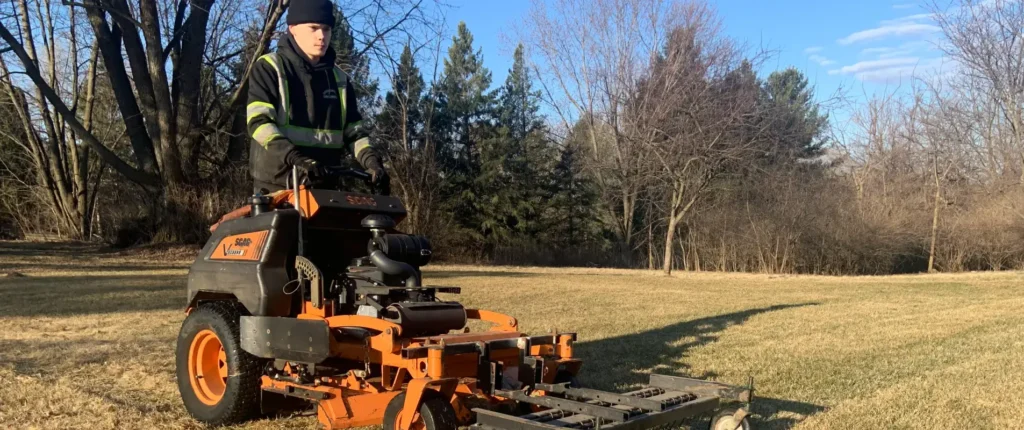

Lawn Aeration in Wisconsin: When, Why & What to Expect
The best time for lawn aeration in Wisconsin is usually late summer through fall, when turf is actively growing and soil conditions support recovery. For many Madison-area lawns, aeration works especially well when paired with overseeding before winter stress sets in.
Carrington Lawn & Landscape recommends making aeration part of a consistent lawn care plan, not just a rescue service after compaction or bare spots appear.
When Should You Aerate a Lawn in Wisconsin?
For Wisconsin lawns, fall is often the most practical time to aerate. Grass is still growing, summer stress is easing, and seed has a better chance to establish before winter.
The University of Wisconsin–Madison notes that fall is an excellent time for core aerating, and that aeration helps manage thatch and reduce soil compaction. It also recommends aerating when soil moisture is adequate, so the equipment can pull clean soil cores instead of bouncing off dry, hard ground.
Spring aeration can be useful in some cases, but it is not always ideal. Spring lawns are often wet, and aerating too early can cause minor turf damage. Spring seeding can also interfere with pre-emergent weed control.
Why Lawn Aeration Matters
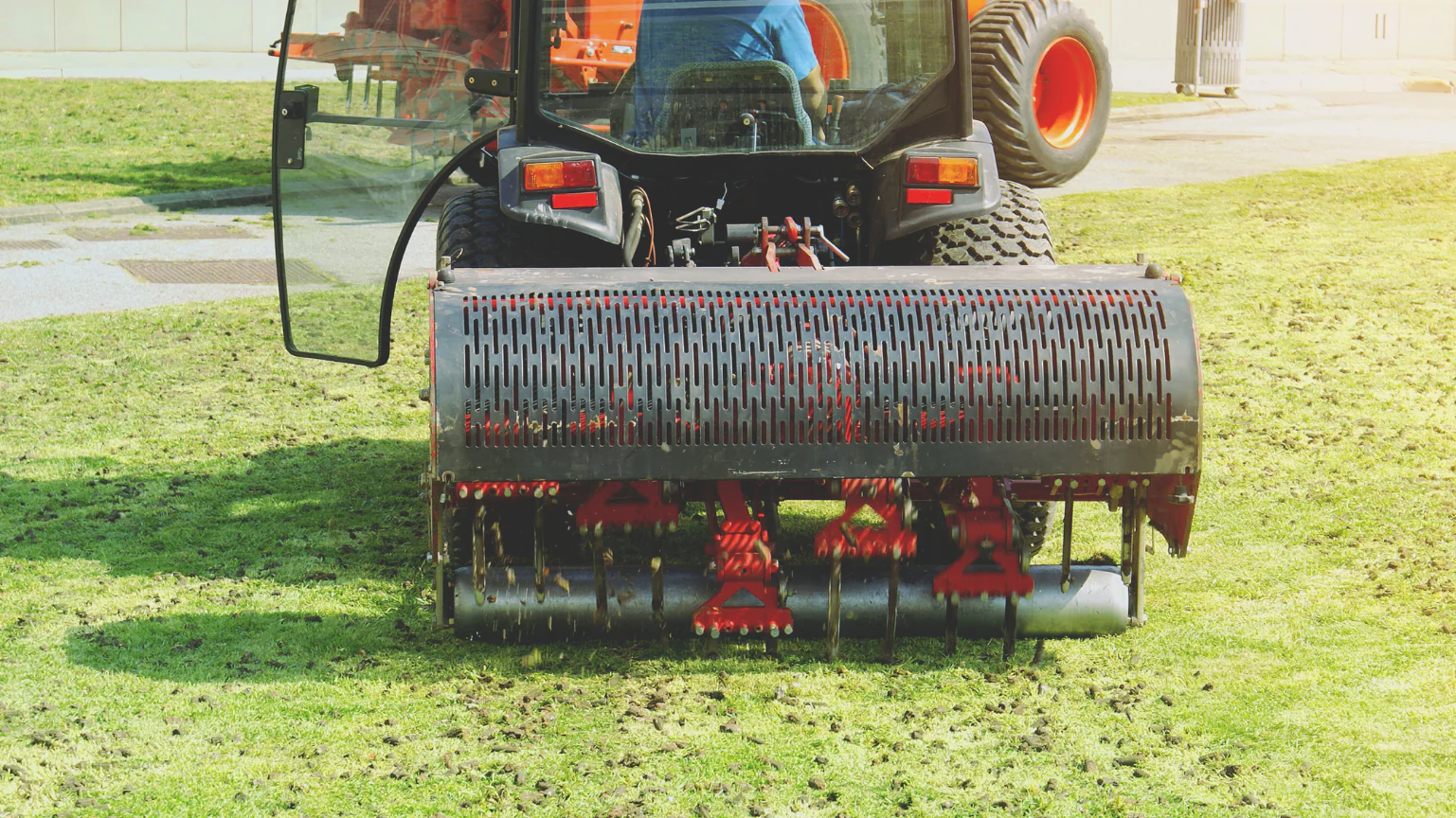
Core aeration removes small plugs of soil from the lawn. Those openings help air, water, fertilizer, and nutrients reach the root zone instead of sitting near the surface or running off.
Aeration can help with:
- Compacted soil from foot traffic, pets, mowing, and clay-heavy soil
- Thin or weak turf that struggles even with watering and fertilization
- Poor drainage or water pooling after rain
- Thatch buildup that blocks movement into the soil
- Bare areas that need better seed-to-soil contact
A healthier lawn is not just about color. Aeration supports deeper roots, better nutrient uptake, stronger drought tolerance, and improved resistance to weeds, disease, and pests.
Should You Aerate Before Overseeding?
Aeration before overseeding is one of the best ways to improve germination.
The holes created during aeration act like tiny seed beds. They help seed settle into the soil instead of sitting on top of the lawn, where it can dry out, wash away, or get eaten by birds.
For thin lawns, Carrington Lawn & Landscape often recommends aeration and overseeding together. You can also read the related guide on spot seeding bare areas if your lawn has smaller patches that need attention.
What to Expect After Lawn Aeration
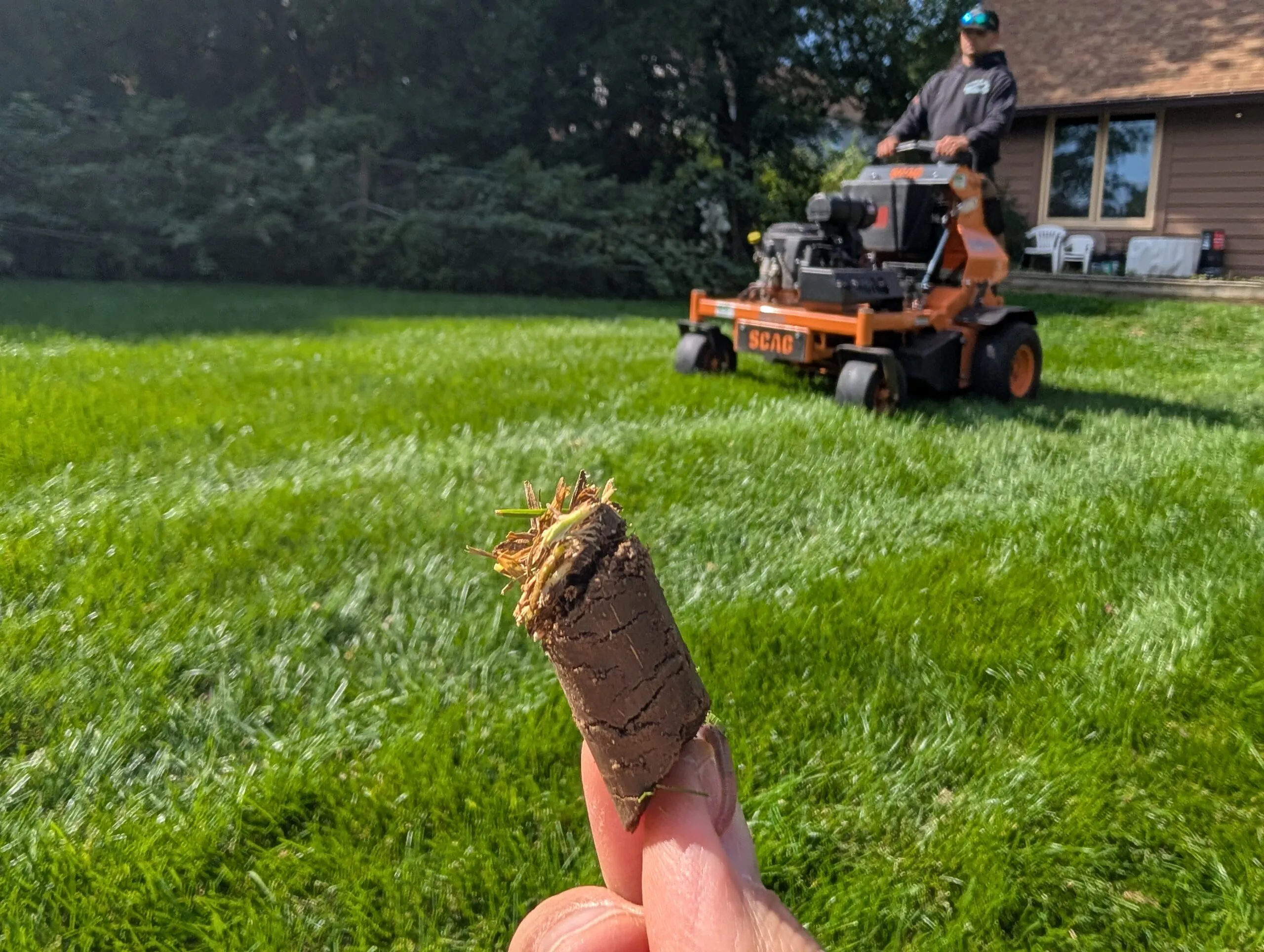
Right after aeration, your lawn will have small soil plugs scattered across the surface. Leave them there.
Those plugs naturally break down and return nutrients to the soil. You can mow over them once they dry, or lightly break them up with a rake if you did not overseed at the same time.
After aeration, your lawn may look a little messy for a short time, but that is normal. The real benefit happens below the surface as roots gain better access to air, water, and nutrients.
Aeration vs. Rolling Your Lawn
Rolling may seem like a quick way to smooth bumps, but it can make compaction worse.
If the goal is to improve uneven, stressed, or compacted turf, aeration is usually a better first step. A double or multiple-pass aeration may help open the soil more effectively than a single pass, especially on heavily compacted lawns.
How Often Do Wisconsin Lawns Need Aeration?
Most established lawns benefit from aeration once a year, especially if they see regular use or have compacted soil.
You may need annual aeration if your lawn has:
- Heavy foot traffic
- Pets or kids playing on it often
- Clay soil
- Thin turf or recurring bare spots
- Water pooling after rainfall
- A spongy feel from thatch buildup
Lawns with fewer stressors may not need aeration every year, but it is still worth evaluating as part of your lawn care program.
Aeration vs. Dethatching
Aeration and dethatching solve different problems.
Aeration opens compacted soil and improves movement of air, water, and nutrients into the root zone. Dethatching removes the layer of dead grass, stems, and organic matter that can build up between the grass and soil.
If your lawn feels spongy or has a thick thatch layer, dethatching may be needed. If the soil is hard, water pools, or grass is thinning despite regular care, aeration may be the better starting point.
Lawn Aeration Services in the Madison Area
A strong lawn takes more than one seasonal service. Carrington Lawn & Landscape provides lawn care programs that help Madison-area homeowners manage turf health through practical, consistent care.
Our approach is built around quality work, reliable scheduling, and clear communication. Learn more about our team and the full-service lawn and landscape support we provide throughout the Madison area.
Ready to plan aeration, seeding, or recurring lawn care? Let’s Talk.
FAQs About Lawn Aeration in Wisconsin
What month is best for lawn aeration in Wisconsin?
Late summer through fall is usually best. Many Wisconsin lawns respond well when aeration is completed while grass is actively growing and before winter weather arrives.
Can I aerate in spring?
Yes, but spring aeration is more situational. Wet soil, soggy turf, and weed-control timing can make fall a better choice for many lawns.
Should I remove the soil plugs after aeration?
No. Leave the plugs on the lawn so they can break down naturally and return nutrients to the soil.
Can aeration help reduce weeds?
Aeration does not kill weeds directly, but it helps turf grow thicker. A fuller lawn can naturally crowd out some weeds over time.
Is aeration enough to fix bare spots?
Not always. Aeration improves soil conditions, but bare or thin areas often need overseeding or spot seeding to fill in properly.