
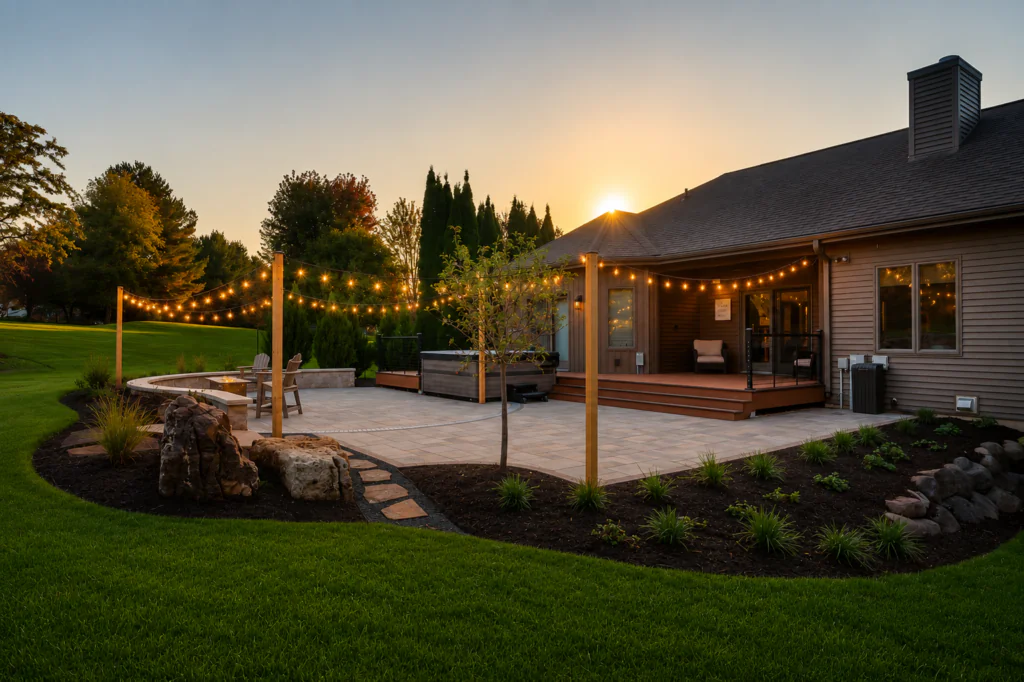


Gas Fire Pit vs Wood Burning: Pros, Cons & What WI Homeowners Choose
Choosing between a gas fire pit and a wood-burning fire pit comes down to convenience, atmosphere, upkeep, and local rules. Gas offers quick, clean heat, while wood provides a traditional campfire experience. The right choice depends on how you plan to use your Wisconsin backyard.
At Carrington Lawn & Landscape, we help homeowners consider how a fire feature will fit their patio, routines, property, and long-term landscape plans.
What Are the Key Differences Between Gas and Wood Fire Pits?
For homeowners comparing a gas fire pit vs wood burning, the biggest differences are ease of use and the experience each option creates.
| Feature | Gas Fire Pit | Wood-Burning Fire Pit |
|---|---|---|
| Startup | Turns on quickly | Requires building a fire |
| Cleanup | Minimal | Ash and debris removal |
| Smoke | Little to none | Produces smoke |
| Flame style | Controlled and consistent | Natural and varied |
| Fuel | Natural gas or propane | Seasoned firewood |
| Cooking | Depends on the unit | Possible when permitted |
| Maintenance | Burner and gas-line care | Ash removal and masonry care |
| Placement | Requires fuel and safety planning | Requires smoke and spark planning |
Gas is often a practical fit for frequent, low-effort use. Wood may be better for homeowners who enjoy tending a traditional fire.
What Are the Benefits of Choosing a Gas Fire Pit?
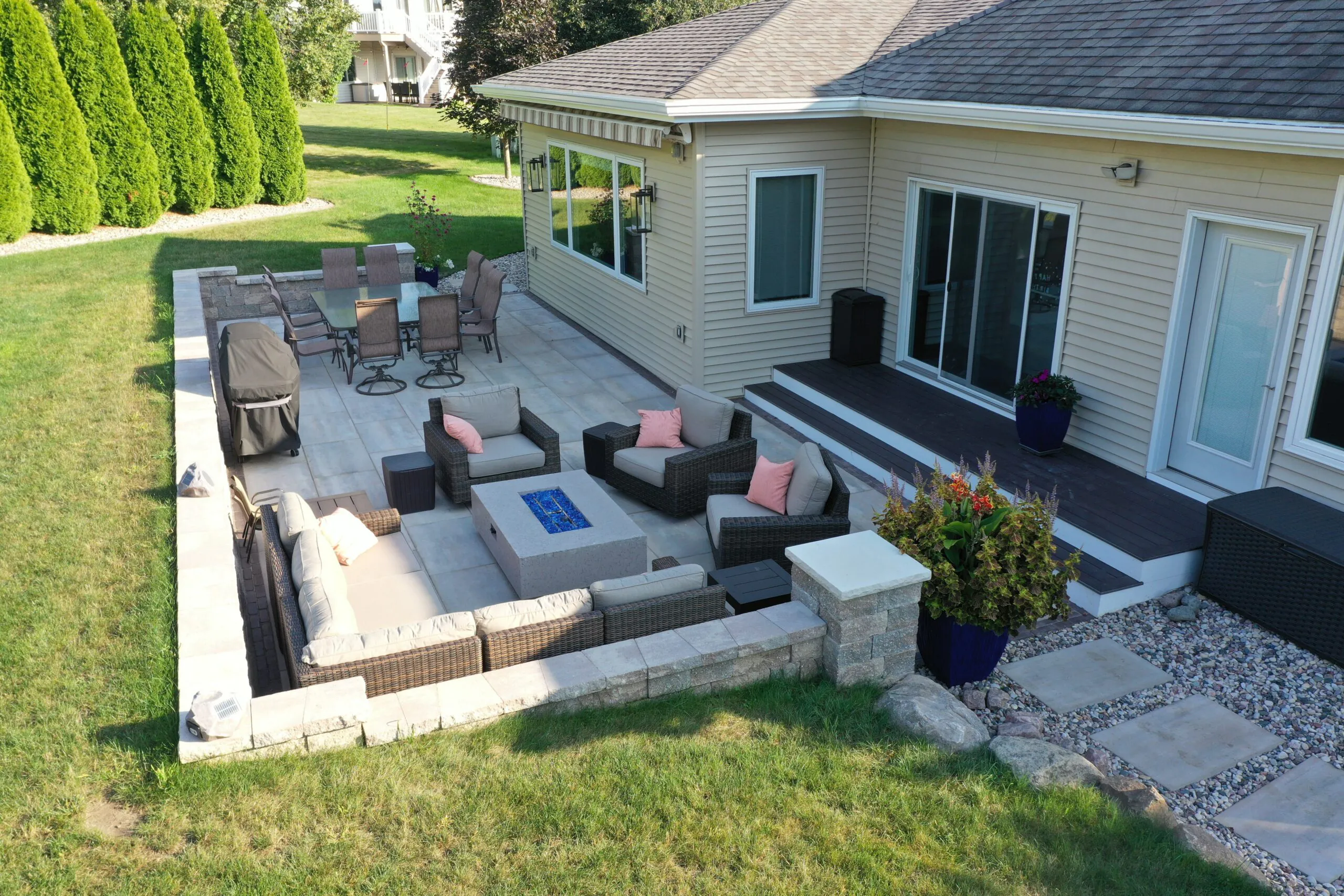
Gas fire pits are designed for convenience. With the turn of a valve or push of an ignition switch, you can enjoy a controlled flame without gathering wood or cleaning ashes afterward.
Key benefits include:
- Quick startup and shutdown
- Steady, adjustable flames
- Less smoke on patios and clothing
- No firewood storage
- Minimal cleanup between uses
- Easy use for brief weeknight gatherings
A gas fire pit can work especially well near seating, an outdoor kitchen, or another regularly used living area. It is easy to turn on for a short visit and shut down when everyone goes inside.
Gas systems still require careful planning. The design must account for fuel access, ventilation, manufacturer clearances, drainage, and nearby materials. A natural gas system may also require a professionally installed line, while propane requires safe tank placement and regular refilling.
Why Choose a Wood-Burning Fire Pit for Your Backyard?
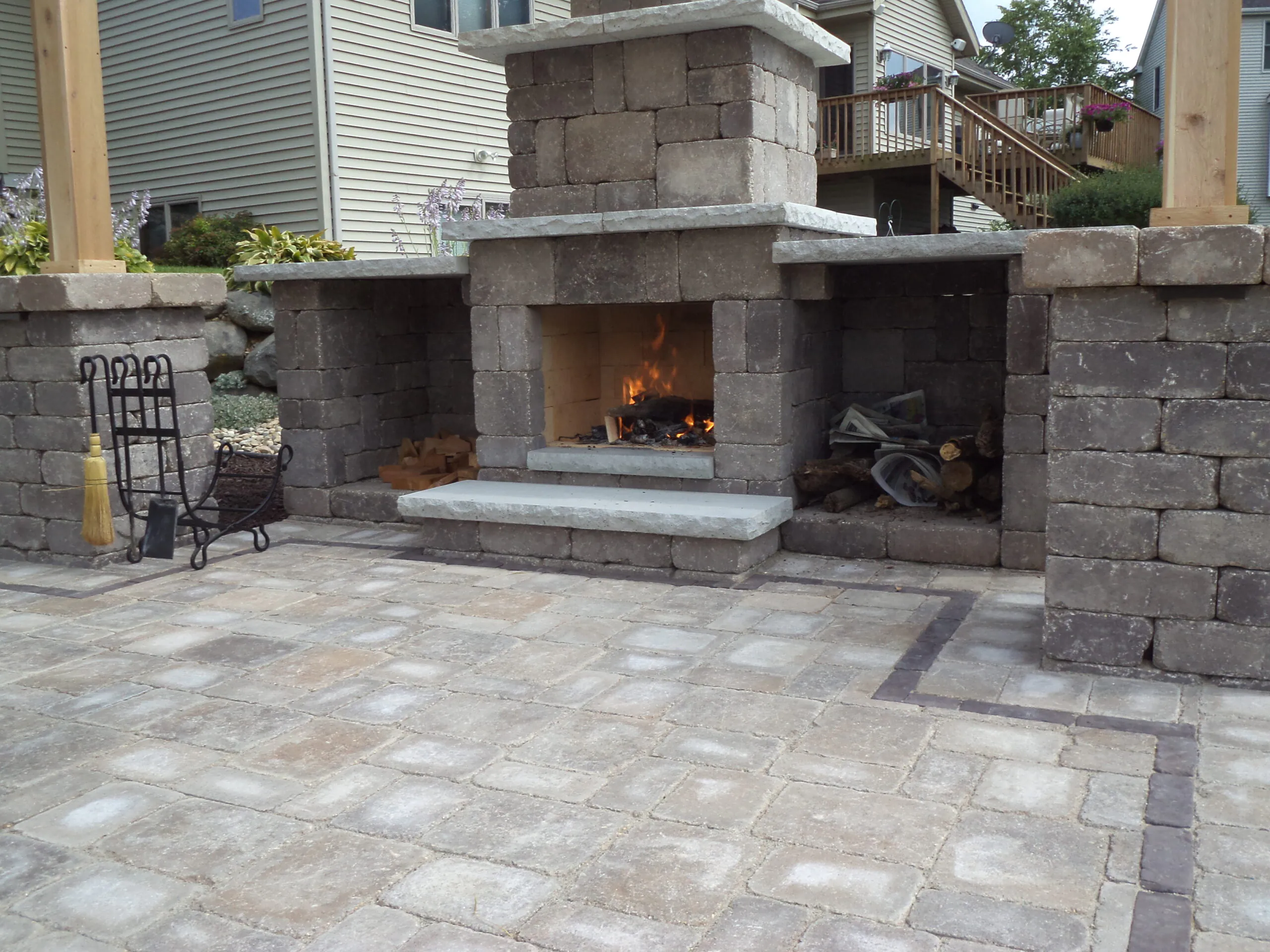
A wood-burning fire pit offers the sound, scent, and changing flames many people associate with evenings outdoors. It can become a natural gathering place for weekend fires, fall get-togethers, and family traditions.
Homeowners may prefer wood because it provides:
- A classic campfire atmosphere
- Crackling sounds and natural flames
- Strong warmth on cool evenings
- No permanent gas connection
- A hands-on fire-building experience
The tradeoff is added work. Wood must remain dry and stored away from the home. Fires take time to build, sparks must be controlled, and ashes must be handled safely.
The U.S. Environmental Protection Agency’s guidance for recreational fires recommends burning only dry, seasoned wood. Green wood creates more smoke, while garbage, plastic, construction debris, and yard waste should not be burned.
Which Fire Pit Is Better for Wisconsin Weather?
Both gas and wood-burning fire pits can work well in Wisconsin, but the design needs to account for changing seasons. Cold temperatures, snow, moisture, wind, and repeated freeze-thaw cycles can all affect how the fire pit performs and how the surrounding materials hold up over time.
A well-planned fire pit installation should consider drainage, prevailing winds, seating distance, fuel access, and year-round exposure. These details help make the space more comfortable to use and easier to care for through changing weather.
Homeowners can also explore the latest fire pit landscape design trends for ideas related to layout, seating, materials, and comfort.
Do You Need a Permit for a Fire Pit in Wisconsin?
Fire pit rules vary by municipality, so homeowners should confirm local requirements before installing or using one. State rules, municipal ordinances, neighborhood restrictions, and temporary burn bans may all apply.
The Wisconsin Department of Natural Resources burning permit information explains when a state burning permit may be required. Even when a DNR permit is not needed, homeowners must still follow local ordinances and any temporary fire restrictions.
The City of Madison also publishes fire safety guidance for portable outdoor fireplaces and fire pits. The guidance addresses placement, stable surfaces, combustible patios and decks, spark control, and adult supervision.
Rules may differ in Middleton, Waunakee, Verona, Sun Prairie, and other Dane County communities. Check with your municipality or local fire department before choosing a location or lighting a fire.
Create a Fire Feature That Fits Your Madison Yard
The right fire pit should fit your property, routines, and preferred outdoor experience. Carrington Lawn & Landscape can incorporate a gas or wood-burning feature into a cohesive outdoor living plan for homeowners in Madison and nearby Dane County communities.
Founded in 1998, our team brings local knowledge, structured communication, and practical recommendations to landscape projects. Ready to discuss your backyard? Let’s Talk.