

How Do You Care for New Landscaping After Installation?
Caring for new landscaping starts with understanding what your landscape needs are in the first few weeks, first year, and beyond. With the right watering, maintenance, and expectations, your landscape will establish properly and continue to improve over time.
At Carrington Lawn & Landscape, we help homeowners navigate post-install care with practical guidance that supports healthy growth and long-term success.
What Should You Expect Right After a Landscape Installation?
The most important thing to remember after installation is that your landscape is settling in. Plants are focusing on root development, turf is recovering from construction activity, and hardscape materials are beginning their natural aging process.
This period isn’t about perfection; it’s about establishment, patience, and consistency.
Many of these early-care considerations are addressed during the design phase, which is why Carrington Lawn & Landscape approaches landscape design with long-term performance, plant maturity, and maintenance needs in mind— not just day-one appearance.
How Do You Care for Newly Installed Trees and Shrubs?
Newly planted trees and shrubs need time to establish strong root systems, which means early care should focus less on appearance and more on consistent, thoughtful maintenance.
Start With Proper Watering
Watering is the single most important factor in caring for new landscaping. Newly installed trees and shrubs require consistent watering, but not necessarily on a fixed daily schedule.
Watering needs will change based on:
- Temperature and sun exposure
- Rainfall
- Wind conditions
- Soil type
The goal is to keep the root zone moist without oversaturating it.
For more tips, check out our blog: Watering New Plants: Guidelines for Healthy Growth.
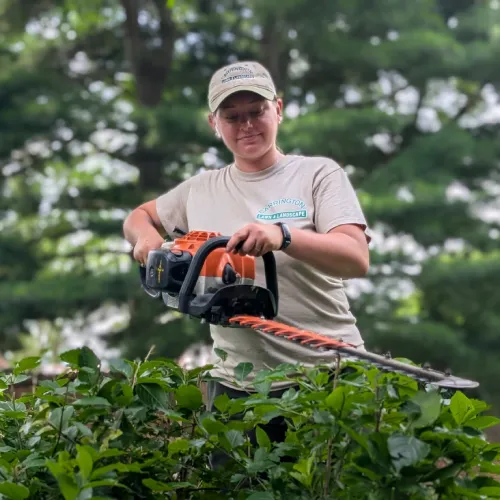
When Should You Prune New Plants?
In most cases, you shouldn’t prune in the first year. A helpful rule of thumb is:
Year one: sleep. Year two: creep. Year three: leap.
During the first year, plants are focused on root growth, not top growth. Light shaping may begin in year two, with more routine pruning once plants are fully established.
Broken or diseased branches can be removed as needed, but heavy pruning should wait.
How Do You Care for Grasses and Perennials?
Grasses and perennials follow a similar establishment pattern, though they often reach maturity faster than trees and shrubs.
Key Care Tips
- Maintain regular watering during establishment
- Keep a consistent mulch layer to protect roots
- Deadheading spent blooms is optional but can encourage reblooming
- Most perennials are cut back in fall or early spring, depending on preference
Some ornamental grasses and perennials are intentionally left standing through winter for visual interest and structure. Others are cut back to keep beds tidy.
How Much Mulch Is Too Much?
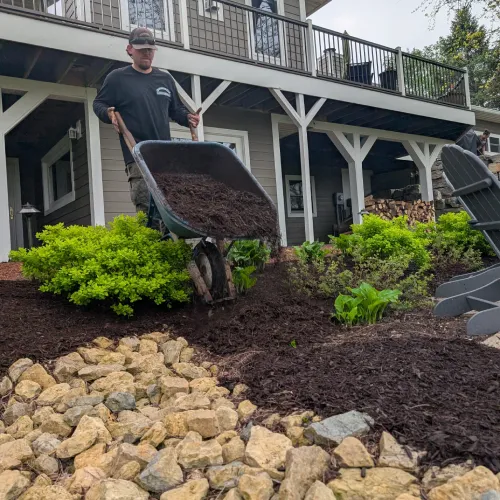
Mulch helps retain moisture, regulate soil temperature, and suppress weeds, but too much mulch can cause problems.
Best Practices for Mulch
- Maintain about 3 inches of mulch
- Avoid piling mulch against tree trunks or plant stems
- Watch for “mulch volcanoes,” which can trap moisture and promote disease
Refreshing mulch every year or two is good practice, but adding mulch repeatedly, letting it get thick without allowing it to break down, can harm plants and even affect your home’s siding. Sometimes uneven mulch thickness requires removal or redistribution.
For more information about horticulture native to Madison and Wisconsin at large, visit the University of Wisconsin-Madison Extension – Horticulture website.
What Should You Know About Landscape Edging?
Different edging styles require different levels of maintenance.
- Metal, plastic, and brick edging help keep grass out of beds, but can still be susceptible to shifting due to freeze-thaw cycles
- Metal edging is generally easier to reset than plastic
- Brick edging is more stable but still requires monitoring
- Natural trench edges look great initially, but need seasonal redefining
If your beds contain rock instead of mulch, a physical edge is strongly recommended to prevent the stone from migrating into lawn areas.
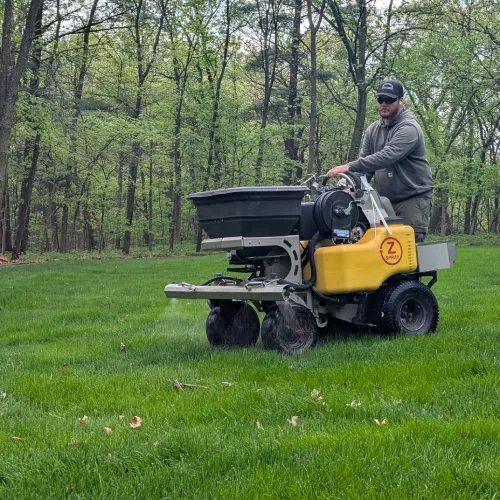
How Do You Care for New Grass, Seed, or Sod?
New lawns, whether seeded, sodded, or affected by construction traffic, require different care approaches, especially in the early stages when roots are establishing and soil conditions are recovering.
New Seed
- Requires frequent, light watering
- Avoid herbicides until the grass has been mowed two to three times
- Expect some weeds; most are annual and temporary
- Starter fertilizer can be applied about 30 days after seeding
If straw or jute erosion matting is installed, do not pull it up. If areas heave as grass grows, carefully cut the mat before mowing.
Sod
- Looks finished immediately, but needs deep, consistent watering
- Roots must set into the soil beneath; don’t let the soil dry out
- Mow once the grass is tall enough, avoiding wet conditions
- Avoid starter fertilizer; transition to a standard fertilizer program
Sod requires attentive care early on, even though it looks established right away.
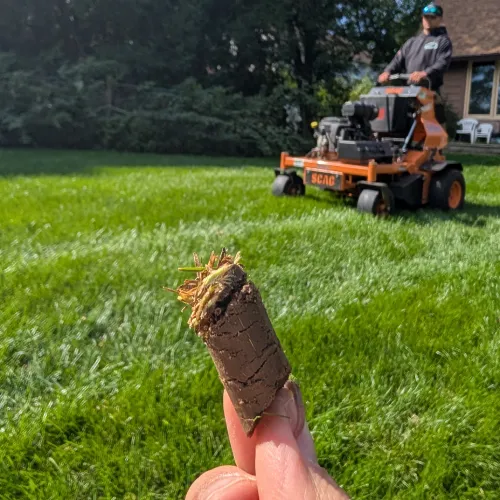
Turf Compaction After Construction
Heavy equipment can compact soil during installation. Recovery may include:
- Core aeration
- Light topdressing and reseeding
- Fertilization to encourage regrowth
These areas typically recover well with time and basic lawn care.
For homeowners who want extra support during establishment, Carrington Lawn & Landscape offers year-round lawn care services.
Do Hardscapes Need Maintenance After Installation?
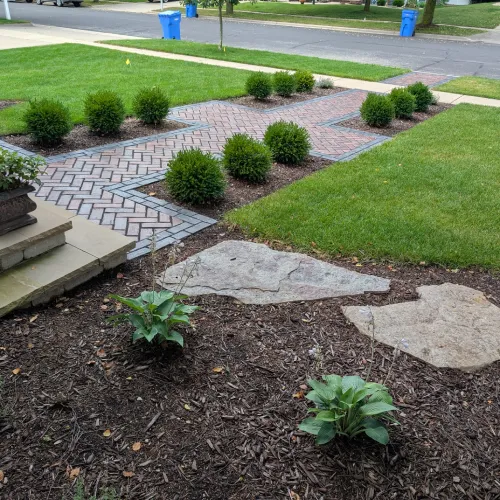
Yes, hardscapes naturally experiences wear over time.
What to Expect
- Slight color fading is normal
- Polymeric sand typically lasts several years and can be refreshed
- Sealing patios can help protect surfaces, preserve finishes, and extend lifespan
Winter Care Tips
- Avoid using salt on patios
- Use plastic shovels instead of metal edges
- Prevent ice buildup with safer alternatives recommended for hardscapes
When Should Tree Stakes Be Removed?
Tree stakes are temporary and should not be left indefinitely.
- Stakes help stabilize young trees while roots establish
- Straps left too long can restrict growth or damage bark
- A general rule of thumb is two growing seasons, depending on conditions
Once roots are established, stakes should be removed to allow natural movement and strength development.
Need Help With Post-Project Care?
Choosing the right landscape partner doesn’t end when installation is complete. At Carrington Lawn & Landscape, our team understands the full lifecycle of your landscape, from initial design through long-term care. We provide ongoing guidance and maintenance services that help protect your investment and ensure your landscape continues to perform as intended.
Whether you prefer hands-on involvement or professional support, working with Carrington Lawn & Landscape means having a local, trusted partner who stands behind your project long after the work is done.
Contact us today to get started!